Why Does My AC Trip the Breaker?
Here is the thing about a tripped breaker: it is not a random glitch. A breaker trips for a very specific reason — something drew more electricity than the circuit could safely handle. Your AC is not misbehaving for no reason. Something is wrong, and the breaker is doing its job by shutting things off before a wire overheats.
The frustrating part is that there are several possible causes, ranging from a simple dirty filter to a compressor that is on its way out. Some you can fix yourself in five minutes. Others require a licensed technician.
This guide walks you through the six most common causes, how to tell which one you are dealing with, and what to do about each one.

The 6 Most Common Causes
Before you call anyone, it helps to understand what is most likely happening. Here are the six causes, from most to least common.
1. Dirty Air Filter or Clogged Coils
This is the most common cause — and the easiest to fix yourself. When your air filter is clogged, your AC has to work much harder to push air through. That extra effort draws more electricity. If the coils on the outdoor unit are covered in dirt, grass clippings, or cottonwood fluff, the same thing happens.
Check your filter first. If it looks gray or black instead of white, replace it before you do anything else.
2. Failing Capacitor
A capacitor is a small cylinder inside your AC — think of it like a battery that gives the motor a jolt of electricity to get started. When a capacitor starts failing, the motor struggles to start and draws far more power than normal. That surge trips the breaker.
Signs of a bad capacitor: the AC hums but does not turn on, or you hear a clicking sound right before it trips.

3. Compressor Hard-Starting
The compressor is the heart of your AC — it pressurizes the refrigerant to make cooling happen. On very hot days, or as a compressor ages, it can struggle to start from a full stop. This moment of struggling draws a spike of electricity. Over time, these spikes trip the breaker.
A licensed technician can install a device called a hard-start kit, which gives the compressor a boost and reduces that startup spike significantly.
4. Low Refrigerant
Refrigerant is the chemical that actually removes heat from your home. If your AC is low on refrigerant (usually because of a leak somewhere), the compressor works overtime trying to do its job with less to work with. That overworking creates excess heat and current draw, which trips the breaker.
Low refrigerant is not something you can fix yourself. A licensed HVAC technician must find the leak and repair it before recharging.
5. Undersized Circuit
Sometimes the breaker trips not because your AC is broken, but because the electrical circuit was never the right size for the job. This can happen after an AC replacement, when a larger or more powerful unit was installed on an older circuit that was sized for a smaller unit.
This is an electrician problem, not an HVAC problem.
6. Failing Compressor
This is the worst-case scenario. A compressor that is at the end of its life starts drawing enormous amounts of electricity as it struggles to function. When the breaker trips and immediately trips again after you reset it, this is often a sign the compressor itself is failing.
At this point, you are usually looking at a choice between a new compressor (expensive) or a new AC system entirely.
Is It Safe to Keep Resetting the Breaker?
This is the most important question. The answer depends on what happens after you reset it.
If the breaker holds for several hours before tripping again, that tells you the problem is heat-related or load-related. You have time to troubleshoot and call for service at normal rates.
If the breaker trips again within minutes of being reset — especially if it happens two or three times in a row — stop resetting it. Repeatedly resetting a breaker that trips quickly can overheat the wiring and create a fire hazard. This is a same-day service call situation.
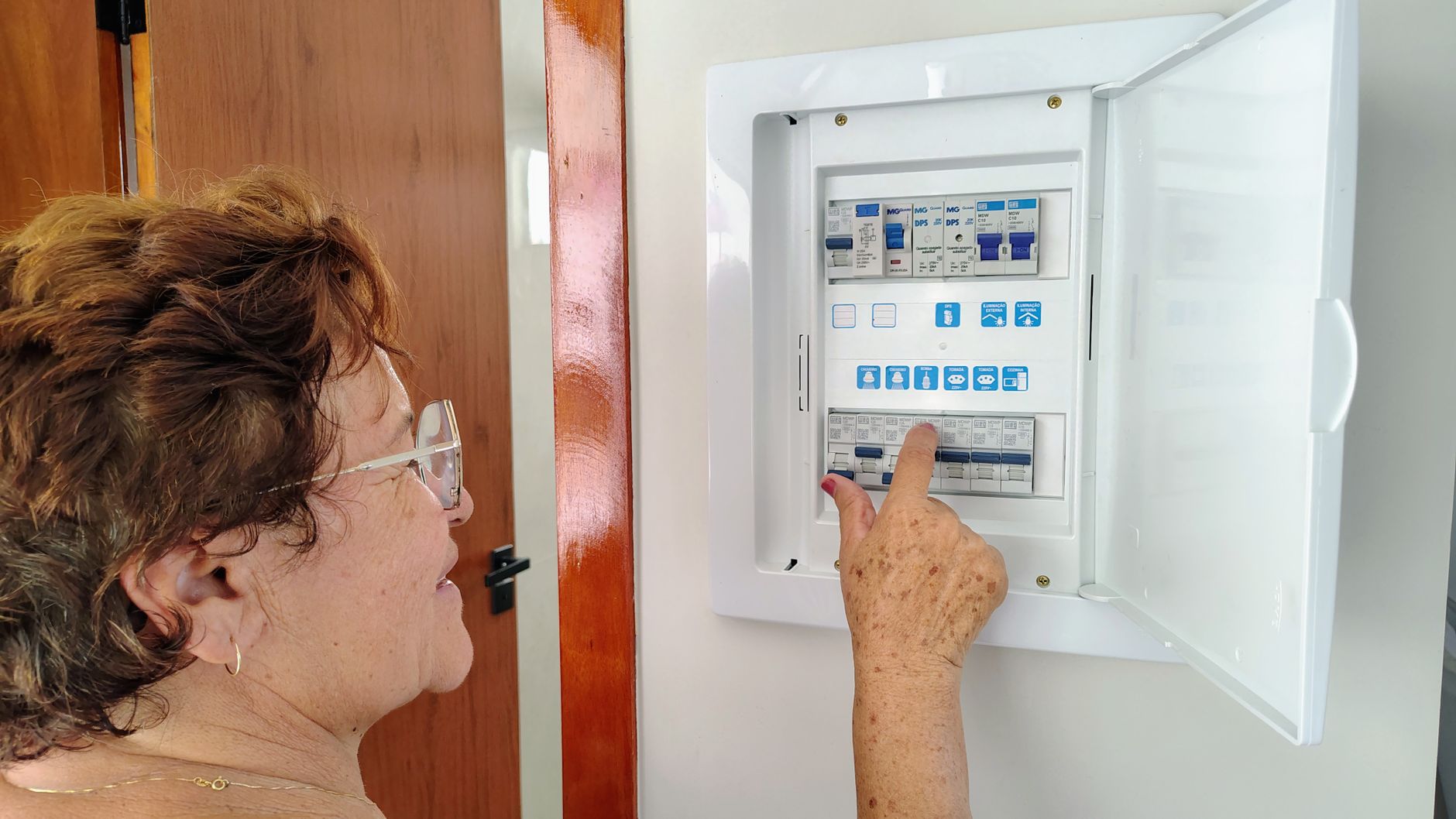
What to Do Step by Step
When your breaker trips, the instinct is to reset it and move on. Resist that urge. Do this instead:
Step 1: Turn off the AC at the thermostat first. Set it to “off” or “fan only.” Do not reset the breaker with the AC still calling for cooling — that can cause a surge that damages the compressor.
Step 2: Check the air filter. Pull it out. If you cannot see light through it, it is overdue for replacement. A clogged filter is the single most common cause of AC problems — including breaker trips. Filters cost $10 to $30 at any hardware store.
Step 3: Walk outside and look at the outdoor unit. Is it buried in leaves? Is the fan spinning freely? Are the metal fins on the sides blocked with dirt or cottonwood? Gently spray the unit with a garden hose from the top down to rinse debris from the fins.
Step 4: Wait 30 minutes. The compressor needs time to cool down before you restart the system. Restarting too soon can trip the breaker again even if the original problem is solved.
Step 5: Reset the breaker once, then restart the AC. Watch the breaker. If it holds for several hours, you likely resolved the issue. If it trips again within 30 minutes, call a licensed HVAC technician. Do not keep resetting it.
Common Mistakes That Make Things Worse
When the AC stops working in July, people get desperate. Here are the mistakes we see most often:
Replacing the breaker with a larger one. This is dangerous. If your AC keeps tripping a 30-amp breaker, the instinct might be to swap in a 40-amp breaker. Do not do this. The wiring in your wall is rated for a specific amperage. Running more current through it than it was designed to handle can melt the insulation and start a fire inside your walls.
Resetting the breaker five times in a row. Each time you reset a breaker that immediately trips, you are sending a jolt of electricity into a system that cannot handle it. Three resets and done — then call for help.
Adding refrigerant to the system yourself. Refrigerants are regulated chemicals. Adding refrigerant without finding the leak first just delays the problem and wastes money. You need a licensed technician with an EPA Section 608 certification to handle refrigerant legally.

Should You Call an HVAC Technician or an Electrician?
This trips people up (pun intended). Here is the simple breakdown:
Call an HVAC technician if the problem is with the AC itself — the compressor, capacitor, refrigerant, or coils. If the AC works fine most of the time but trips occasionally during extreme heat, that is almost always an HVAC issue.
Call a licensed electrician if the wiring or panel is involved — especially if the breaker feels warm or hot when you touch it, if the breaker started tripping only after a new AC was installed, or if other circuits in your home are also having problems.
Some situations require both. If the breaker is fine but the AC is overloaded, an HVAC tech can install a hard-start kit or identify the cause. If the AC is fine but the circuit cannot handle it, an electrician needs to upgrade the wiring or the breaker.
What Does the Repair Cost?
Your cost depends entirely on what is causing the problem:
- New air filter: $10 to $30 (you can do this yourself)
- Capacitor replacement: $150 to $400, including labor
- Hard-start kit installation: $150 to $300
- Refrigerant leak repair and recharge: $400 to $1,500 depending on leak location
- Circuit upgrade by electrician: $300 to $1,000
- Compressor replacement: $1,200 to $2,800, which often makes replacement of the whole AC worth considering
The good news: most trips are caused by capacitors or dirty systems, both of which are on the low end of that cost range. Get a diagnostic visit first — most HVAC companies charge $75 to $150 for a service call, which they often apply toward the repair if you go ahead with it.
The Bottom Line
A tripped AC breaker is almost never random. The breaker did its job — it stopped electricity from flowing through a circuit that was getting dangerous. Your job is to figure out why.
Start with the simple stuff: a dirty filter, a clogged outdoor unit. These two things alone account for over a third of all AC breaker trips. If those checks do not solve it, or if the breaker trips the moment you reset it, call a licensed HVAC technician. Do not keep resetting a breaker that keeps tripping — that is how electrical fires start.
For most homeowners, this ends up being a capacitor replacement ($150 to $400) or a service call to identify a refrigerant issue. The key is catching it now, before a small electrical problem becomes a compressor problem — and a $300 repair becomes a $3,000 one.


0 Comments